Disclosure: As an Amazon Associate, Ziibra earns from qualifying purchases. Some links below are affiliate links, at no additional cost to you. Our recommendations are based on published specifications and fit for different rental situations—not hands-on testing.
Quick answer: Start with your window, not a product ranking. If you have a recessed window with two firm, parallel sides and light curtains, a twist-fit tension rod is a sensible first option. For smooth surfaces without a useful recess, a purpose-made adhesive curtain-rod holder may work if you follow every size, surface, and load restriction. For floor-to-ceiling setups, consider an adjustable room-divider system. Trim-mounted pin brackets can support conventional rods but do leave holes in wood trim.
A rod described as “no-drill” is not automatically lease-approved, damage-free, or suitable for heavy blackout curtains. Window geometry, surface finish, fabric weight, installation technique, and the terms of your lease all matter.
At a glance: which mounting method matches your rental?
| Your window or need | Candidate option | Main check before buying |
|---|---|---|
| Recessed window, light curtains | Kenney Rogers Twist & Fit 28–48 in | Firm parallel surfaces; published numeric weight limit not confirmed for this exact variant |
| Smooth finished surface, no usable recess | Command Curtain Rod Holders | Manufacturer’s rod dimensions and 10 lb claim; surface and removal rules |
| Awkward placement or room division | Umbra Anywhere expandable system | Ceiling height 7–10 ft, width 36–66 in and 15 lb maximum published capacity |
| Traditional compatible wood trim; small pinholes acceptable | Kwik-Hang Single Brackets | Wood-trim dimensions and lease permission; pins pierce trim |
How to use this table: These are conditional product fits, not results from laboratory strength testing. Published capacities apply to specific products and configurations; never transfer a rating from one model to another. Check the manufacturer’s current instructions before buying or installing.
Our four evidence-based picks
1. Kenney Rogers Twist & Fit — straightforward inside-frame option
Best suited to: A recessed window measuring within the selected rod’s 28–48-inch adjustment range, paired with light to medium curtains. The black KN634NP model has a steel rod, approximately 5/8-inch diameter and protective non-slip end caps; the rod works by twisting to hold against the sides of the recess. Retailer listings describe it as suitable for light-to-medium panels. Model specifications.
Why consider it: No wall screws, adhesive strips or separate brackets. It is especially practical where the recess has a stable surface on both sides. What may rule it out: a flush window, uneven reveal, delicate painted surfaces or a heavy curtain. We did not establish a manufacturer-confirmed numeric weight capacity for this exact model, so do not treat “medium weight” as an allowance for heavy blackout drapes.
Shopping note: This link is for the black 28–48-inch Amazon variant observed during product research. Recheck the selected finish, dimensions, seller and current availability before ordering.
2. Command Curtain Rod Holders — smooth-wall alternative
Best suited to: Renters whose windows lack a reliable inside mounting recess, but who have an eligible smooth, clean surface for adhesive attachment. 3M describes its dedicated Command Curtain Rod Holders as fitting curtain rods around 1/2–3/4 inch in diameter, with a 10 lb published holding claim. A separate white hook listing specifies rods up to 48 inches long. Check the exact finish and product variant; packaging and instructions take priority. 3M manufacturer specifications.
Why consider it: It avoids drilling and does not need side-to-side tension. What may rule it out: textured or weakly adhered paint, wallpaper, rough surfaces, unsuitable humidity/temperature, incompatible rod diameter, or heavy panels. Adhesive removal can still peel unstable paint; follow 3M’s current application, wait-time, load and removal instructions rather than assuming a zero-risk result.
3. Umbra Anywhere — best-fit candidate for awkward spaces and room division
Best suited to: Apartments where a normal window bracket is awkward or you want curtains to divide a room. Umbra’s Anywhere system adjusts from 36–66 inches wide and 7–10 feet tall, with a manufacturer-stated maximum load of 15 lb. Its frame is supported by floor-to-ceiling tension and does not function like a small rod squeezed inside a window reveal. Curtains are not included. Umbra specifications.
Why consider it: More flexible placement and potential wraparound curtain coverage without making screw holes. What may rule it out: ceilings outside the supported height range, unsuitable floor/ceiling surfaces, the frame’s visible vertical poles, higher cost, or stock limitations. The official product page displayed limited availability during research, so check availability before recommending immediate purchase.
Shopping note: The Amazon link was identified as the matte-black Anywhere variant during sourcing. Confirm the exact version and current listing before purchase.
4. Kwik-Hang Single Brackets — when tiny holes in wood trim are permitted
Best suited to: Traditional windows with compatible wood trim when the renter is permitted to make small holes in the trim. Kwik-Hang specifies 1/2–1-inch-wide trim, a published 20 lb support claim for the specified bracket product, and bracket versions for 5/8-inch or 1-inch rods. The manufacturer does not recommend oak, MDF, PVC, metal or crown molding. Additional center support may be needed for wider spans. Kwik-Hang product details; manufacturer FAQ.
Critical distinction: These brackets install by tapping pins into the top of the trim with a hammer. They may avoid drilling into drywall, but they are not hole-free. Do not choose them where the lease forbids punctures or the trim material is unknown. Nor should the 20 lb claim be treated as a guaranteed safe limit for every rod, span or curtain configuration.
Tension vs adhesive vs trim pins: the decision that matters
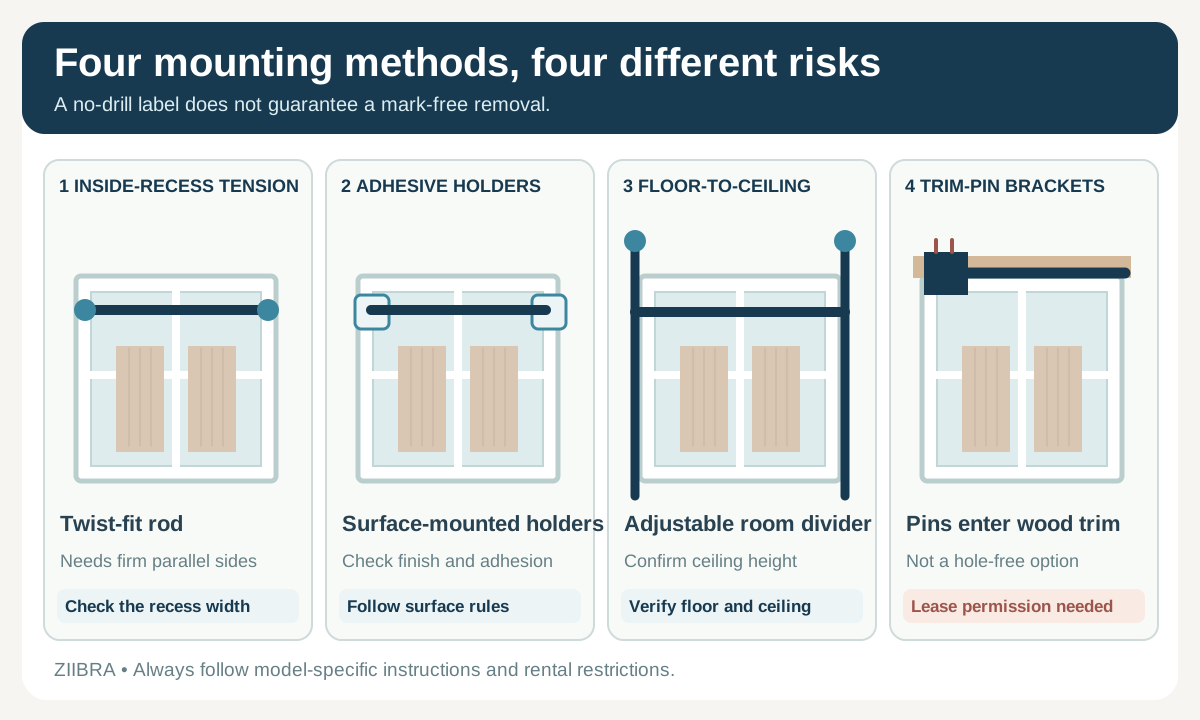
Viewing on a phone? Open the full-size four-mounting-methods diagram to zoom in on the details.
- Inside-recess tension: Needs a solid, parallel window recess. No adhesive is needed, but excessive pressure may mark weak paint and slippage is possible.
- Adhesive holders: Need approved smooth surfaces and strict load/rod compatibility. Cure time and removal procedure matter; adhesive is not suitable for every finish.
- Floor-to-ceiling tension: Can work beyond the window reveal, but requires compatible floor/ceiling conditions and space for vertical poles.
- Pin-mounted brackets: Can hold a conventional rod on eligible trim, but create small holes. “No drill” does not mean “no alteration.”
Measure your window before choosing a rod
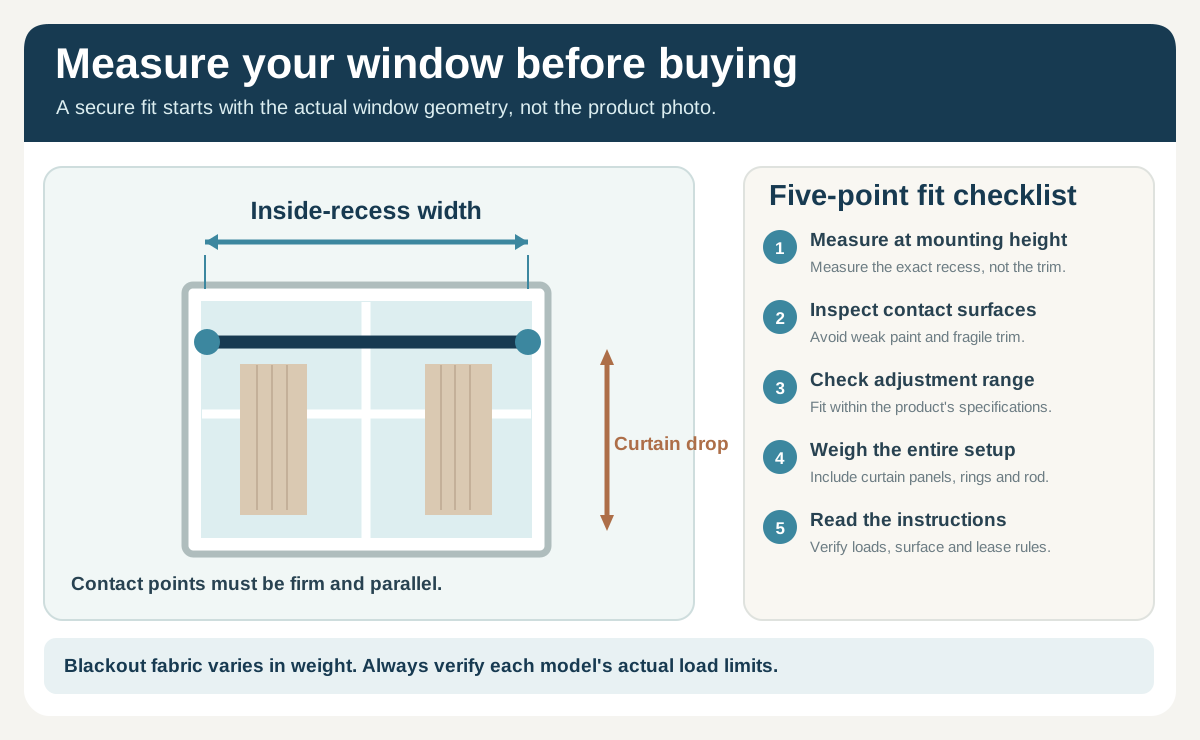
Viewing on a phone? Open the full-size window-measurement diagram to zoom in on the details.
- Measure the inside recess: Record the distance between the two opposing sides at the proposed rod height. Check for a firm, level contact surface at each end.
- Measure the usable mounting zone: Look for trim edges, obstructions, a window handle, blinds, or a roller shade cassette.
- Measure clearance: Note whether you want curtains to hang inside the frame or beyond its edges to reduce light gaps.
- Check the combined load: Include both curtain panels, rings/clips and the rod. Weighing the components is more reliable than guessing from a fabric description.
- Confirm ceiling height if using Umbra: Check more than one point and verify the floor/ceiling surfaces are appropriate for tension.
- Read the lease: If it bans holes, trim penetration or wall adhesives, seek written approval before choosing an installation method.
For an unusually wide span, heavy curtain, frequent pulling, or uncertain surface, consult the exact product guidance and consider professional advice rather than relying on a generic online weight rating.
Can no-drill rods hold blackout curtains?
Sometimes, but “blackout” does not tell you the curtain’s total weight. Thermal and lined panels often weigh more than sheer curtains, and tugging on them adds movement beyond the static hanging load. For the Kenney 28–48-inch option discussed here, we have not confirmed a precise rated load from an authoritative specification; it would be misleading to label it a heavy-blackout solution. Command’s quoted 10 lb and Umbra’s 15 lb figures also apply only under their respective manufacturer conditions.
Before committing, weigh the entire hanging setup, select a mounting system whose published model-specific restrictions fit your situation, and test carefully without pushing toward the maximum limit. If the margin is uncertain, choose lighter curtains or ask your landlord about approved fixed hardware.
How to avoid damage when installing and removing
For tension rods
Protect surfaces by checking they are dry, sound and reasonably smooth. Position both end caps fully on the intended contact surfaces and tighten only according to the manufacturer’s instructions. Do not overtighten against weak drywall edges, and periodically check for slip.
For adhesive holders
Use only surfaces listed by the manufacturer; review freshly painted walls, textured finishes, and humidity restrictions. Clean and allow surfaces to dry as instructed, respect any required bonding time, and keep within the permitted rod size and load. When removing, follow the original strip-pull direction and technique—do not pull the hook straight off the wall. For broader adhesive limitations, see our guide to whether Command strips damage walls.
For pin-mounted brackets
Confirm the trim is an eligible wood species and correct width, inspect for weak or damaged casing, and obtain approval where pinholes are prohibited. Pinholes may be visible after removal and may need repair. These are not recommended as a zero-alteration rental solution.
What we would not buy for a typical rental
- A product advertising “heavy duty” without a model-specific load rating or clear installation conditions.
- Adhesive brackets for textured paint, wallpaper or an unknown finish without manufacturer approval.
- A tension rod adjusted beyond its intended range or balanced on a narrow trim edge.
- Trim-piercing brackets when the lease or landlord forbids holes.
- A product photo that disguises which mounting hardware is actually supplied.
Frequently asked questions
Are no-drill curtain rods completely damage-free?
Not necessarily. A correctly used tension rod may avoid screw holes but can leave marks if overtightened or installed on a fragile surface. Adhesives can lift weak paint, and pin brackets deliberately penetrate wood trim. Always follow the instructions and lease requirements.
What if my window has no recess?
Consider dedicated adhesive rod holders if the finish and load are suitable. A floor-to-ceiling tension system is another option if your ceiling height and room layout fit. If neither is appropriate, request landlord approval for an alternative.
Do Command curtain holders work with any curtain rod?
No. The 3M products checked specify rod-diameter and, for a listed variant, length restrictions. The manufacturer also limits surfaces and total load. Check the selected SKU before ordering.
What is the best no-drill rod for heavy blackout panels?
There is no universal winner. First verify the total load, window construction, available span and the exact published capacity for that model. Some rentals may not have a reliable hole-free solution for heavy drapery without an approved fixed mount.
Can I use Kwik-Hang without drilling?
You may not need a power drill, but Kwik-Hang brackets have small pins that are driven into eligible wood trim. That distinction matters if your lease prohibits alterations.
The Ziibra takeaway
For a simple recessed window and light curtains, start by checking the Kenney Twist & Fit. For an eligible smooth surface without a recess, investigate dedicated Command Curtain Rod Holders. For room division, Umbra Anywhere may solve a problem that ordinary rods cannot. Consider Kwik-Hang only when your trim and lease allow pinholes. None of these should be purchased without confirming fit, surface and curtain weight.
For more rental-friendly changes, read small living room ideas for renters, first-apartment essentials, and renter-friendly accent walls.
How this guide was researched
Updated October 2026. This is a specification-based buying guide; Ziibra did not carry out independent strength or removal testing on these products. We prioritized manufacturer and attributable model-level documentation, distinguished full product systems from mounting accessories, and identified conditions where the products may be unsuitable. Pricing and stock change, and product specifications can vary by size, color or revision. Check official product documentation before buying.
Primary sources: Kenney KN634NP retailer specification · 3M Command Curtain Rod Holders · Umbra Anywhere · Kwik-Hang brackets · Kwik-Hang FAQ.