Affiliate disclosure: As an Amazon Associate, Ziibra earns from qualifying purchases. Some links below are affiliate links, at no additional cost to you.
Quick answer: The best studio apartment storage uses the space you already have: under the bed, inside existing furniture, along low room dividers, near the entryway and in cabinets whose contents have been edited. Start by identifying what each zone needs, then measure before buying anything.
A studio has a unique challenge. The bed, living area, dining spot and often a work desk share one room. When storage spills into every zone, the entire apartment feels cluttered even if you own less than someone with a two-bedroom home.
This guide focuses specifically on where things go. For furniture planning and visual zoning, see our separate studio apartment ideas article.
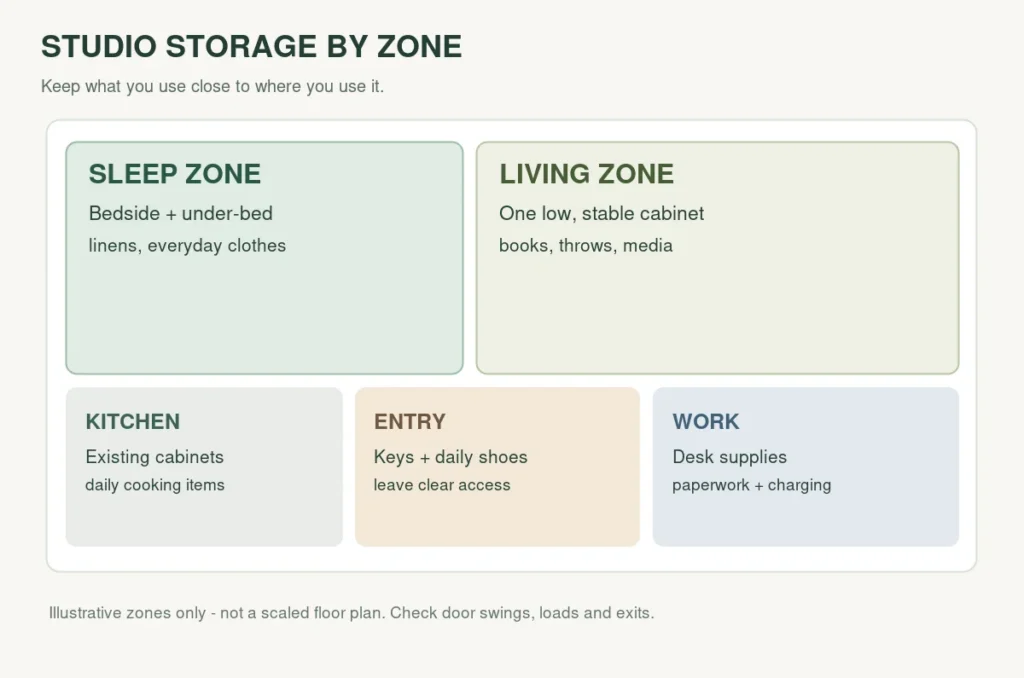
Map your studio into five storage zones
| Zone | What belongs there | Storage first to inspect |
|---|---|---|
| Sleep | Bed linens, sleepwear, spare pillows | Under bed, bedside drawer |
| Living | Blankets, books, media accessories | Low cabinet, coffee table |
| Kitchen | Cooking and cleaning essentials | Existing cabinets and drawers |
| Entry | Keys, coats, everyday shoes | Doorway clearance, shallow storage |
| Work/dining | Computer gear, files, chargers | Desk drawer, clamp-on organizer |
Keep everyday objects near their point of use so you do not have to cross the whole apartment to put one thing away.
Use under-bed space intelligently—not just maximally
Before ordering bins, measure the lowest point across the entire route from the bed edge to the intended storage position. Include casters, raised handles and lids. A support rail may make half the area unusable even when the side opening looks tall enough.
Use lidded bins for seasonal textiles, and smaller pull-out containers for frequently used items. Store damp clothing nowhere until it is fully dry; trapped moisture encourages odors and problems. Our under-bed storage with wheels comparison includes a step-by-step clearance method.
Choose a low divider that does not make the room darker
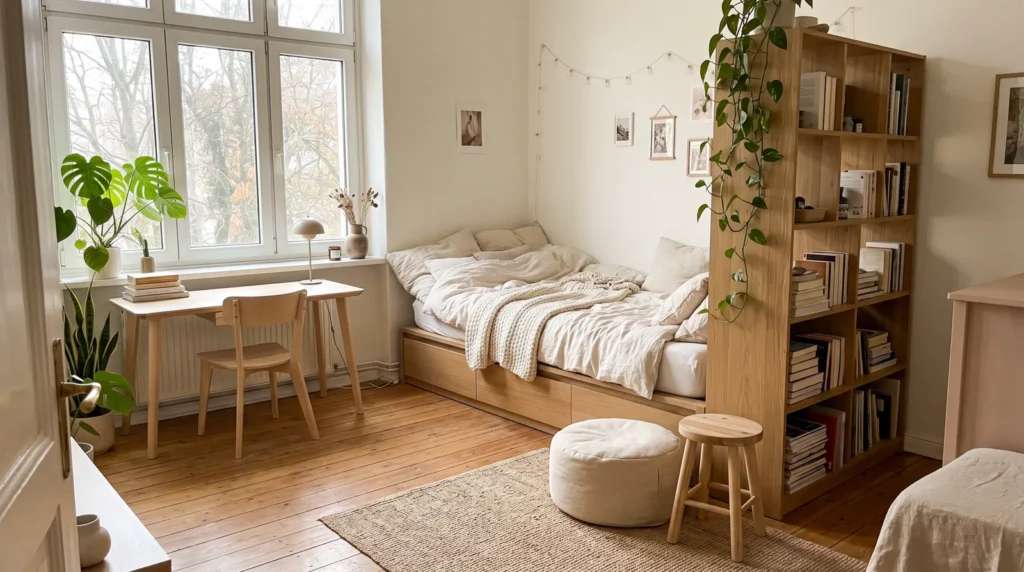
A low open shelving unit between sofa and bed can separate visual zones while providing space for books, baskets and decor. Leaving sightlines open helps the apartment feel like one coherent room instead of several cramped corners.
But shelving can tip. Many bookcases and room dividers require wall anchoring according to the manufacturer’s instructions. Do not use an unstable or unanchored unit as a divider just because your landlord dislikes holes. For high furniture, obtain permission for required restraints or choose a safer alternative.
Create a real entryway even without a foyer
An entry zone needs only a defined place for shoes, keys and one or two everyday bags. A shallow tray atop existing furniture may be enough. A narrow shoe rack should never block the front door’s opening path, emergency egress, or a shared hallway.
Keep off-season coats in a closet or storage container rather than on a permanently crowded rack. If you use an over-door organizer, confirm that it does not interfere with door closure.
Give kitchen cabinets clear jobs
Store heavy cookware at a comfortable low height, daily dishes near where you use them, and food by category. Add shelf risers or bins only if they fit and will not overload an existing shelf. In a studio kitchenette, countertop space is precious; store rarely used appliances rather than leaving them permanently plugged in.
A narrow rolling cart is sometimes useful beside a counter, but measure the passageway and check its brakes, stability and rated load. Never block ventilation or a heat source.
Use hidden storage that is still easy to access
A lidded ottoman or a coffee table with a lower shelf can contain throws and small accessories without adding another large cabinet. Check the lid design and the manufacturer’s safe-use instructions, especially around children. Keep frequently used objects in the easiest-to-reach places; inaccessible hidden storage becomes a forgotten archive.
Do not hide everyday cleaning products beside food or in unsecured low containers where children can access them.
Avoid vertical storage traps
Not every empty wall should hold a tall bookcase. In a small room, high storage can be awkward to reach and unsafe if not installed according to its instructions. Avoid attaching heavy ordinary shelves with picture-hanging strips. For a related surface-risk discussion, see our Command Strips and paint-damage guide; never assume a picture-hanging strip rating applies to a heavy shelf.
Use low furniture first, then consider approved wall-fixed systems if they fit the lease and wall construction.
Worked example: arrange one studio before adding furniture
In a hypothetical studio with one main room, begin by placing a bed against a usable wall and identifying the uninterrupted path from the entry door to the bathroom or kitchen. Put a small closed bin beside the entry for shoes and keys, use existing kitchen cabinets for food and cookware, and reserve under-bed space for spare linens only if it clears the frame.
Next, choose one low living-room storage piece that can hold books and folded blankets rather than buying separate baskets for every corner. Finally, place chargers and paperwork at the desk. This zoning separates daily-use items by function without installing dividers or wall fixtures. The exact arrangement depends on actual door swings, outlets, windows and furniture dimensions.
Before purchase: sketch five zones—sleep, living, kitchen, entry and work—on a page. For each, write the three items used most often there. If an organizer cannot house one of those items accessibly, it is probably not the first piece you need.
A simple storage buying checklist
- Measure the floor footprint and opening clearance, not just the product width.
- Decide exactly which belongings the unit will contain.
- Check assembly instructions, load capacity and any required anti-tip anchors.
- Confirm doors, drawers, carts and bins can open fully.
- Check whether you can move and reuse it in your next home.
- Buy one unit first, then reassess whether another is necessary.
If your studio feels full even after storage upgrades, review the total belongings before adding more furniture.
Storage products for specific studio zones
Measure the location and decide what belongs there before buying either option.
-
Amazon Basics three-tier rolling utility cart
When it helps: Movable storage for a desk or kitchen zone where floor space and wheel movement allow it.
Check first: Measure the entire route and do not block doors or ventilation.
-
Sterilite 56-quart wheeled latching storage box
When it helps: Under-bed or closet storage for dry seasonal items when the assembled box fits.
Check first: Measure the lowest frame clearance, external box height including wheels, and the pull-out space.
Selections are based on published specifications and suitability, not hands-on testing. Prices and availability can change; verify the exact Amazon listing and manufacturer instructions before buying.
Frequently asked questions
How do I add storage to a studio apartment without drilling?
Start with measured under-bed bins, low appropriately stable furniture, baskets in existing cabinets and storage within furniture. Follow any required anchoring instructions.
What furniture gives the most storage in a studio?
It depends on what you own, but a low storage cabinet, compatible under-bed bins and a desk with drawers often serve several everyday categories.
Should I use a bookcase to divide a studio?
Only if it can be used safely according to its assembly instructions, including any required anti-tip restraints. An unsafe freestanding divider is not a good rental workaround.
How can I hide clutter without making my studio crowded?
Give items defined zones, reduce duplicates, and use a limited number of consistent baskets inside furniture rather than adding containers to every surface.
Final takeaway
A functional studio storage plan is less about finding secret square footage and more about making every object easy to locate and return. If you are still arranging the room, our small apartment layout guide can help you decide which furniture deserves the floor space.